

How St. Augustine Small Businesses Get Found on Google
If you run a local business in St. Augustine or anywhere in St. Johns County, you’ve probably heard that you need to “do SEO.” But what does that actually mean — and does it really move the needle for a small business?
The short answer: yes, and more than most business owners realize.
St. Augustine local SEO isn’t about gaming an algorithm or spending thousands of dollars a month. It’s about making sure that when someone nearby is looking for what you offer, your business shows up. This guide breaks down exactly how to do that — in plain English, with no fluff.
And if you want to see where your business stands right now, grab your free local SEO audit here — we built it specifically for St. Augustine and St. Johns County businesses.
St. Augustine Local SEO Starts With Your Google Business Profile
If you do nothing else on this list, do this.
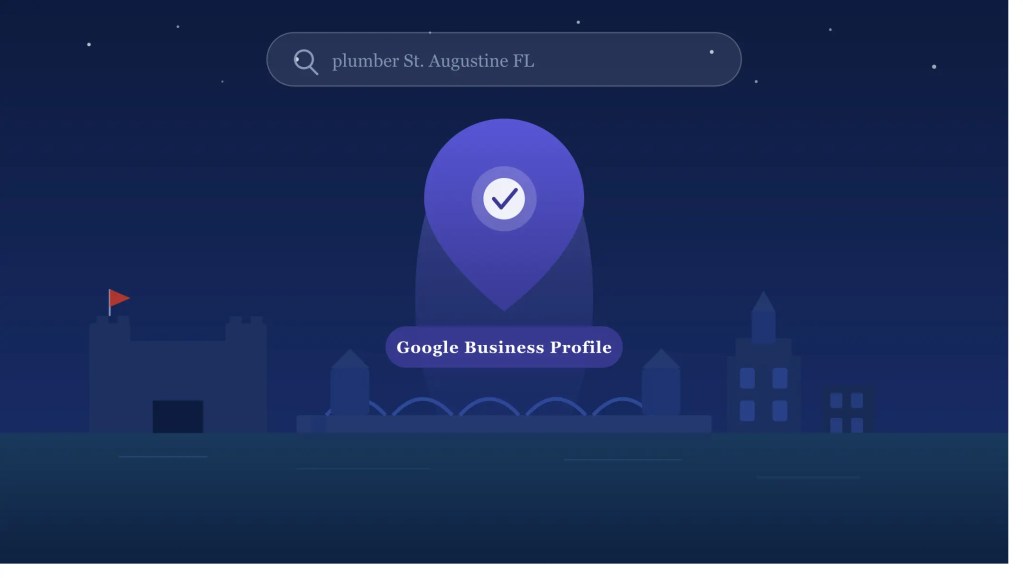
Your Google Business Profile (GBP) is the listing that shows up in Google Maps and the local results panel when someone searches for a business near them. It’s free to set up, and it’s one of the highest-leverage things you can do for local visibility.
Here’s what to check:
- Your business name, address, and phone number are accurate — and match what’s on your website exactly
- Your hours are up to date — including holiday hours and any special circumstances
- You’ve selected the right primary category — this one matters more than most people think
- You have at least 10–15 photos — real photos of your space, products, or team outperform stock images
- You’re responding to reviews — all of them, positive and negative
Google rewards active, complete profiles. If yours has been sitting untouched for years, refreshing it alone can bump your local rankings.
Get Your Name, Address, and Phone Number Consistent Everywhere
This is called NAP consistency, and it’s one of those foundational things that quietly hurts businesses that skip it.
Google cross-references your business information across dozens of directories — Yelp, TripAdvisor, Apple Maps, Facebook, local Chamber listings, and more. If your address shows “US 1” in one place and “US-1” in another, or your phone number has a different area code on an old listing, it creates ambiguity that Google penalizes.
Run a free audit on a tool like BrightLocal or Moz Local to see where your listings stand. Fix inconsistencies starting with the highest-traffic directories first.
Your Website Needs to Speak Google’s Language
A good-looking website that Google can’t read is a missed opportunity. Here’s what matters most for local search:
Use location-specific page titles and headings.
Your homepage title shouldn’t just say the name of your business — it should include what you do and where. Something like “Custom Jewelry Repair — St. Augustine, FL” tells Google exactly who you are and who you serve.
Add your city and county naturally throughout your content.
Don’t stuff keywords in awkwardly, but do write content that reflects where you actually are. Mention St. Augustine. Mention St. Johns County. Mention neighborhoods if it’s relevant. Google uses these signals to connect your business to local searches.
Make sure your site loads fast on mobile.
Most local searches happen on phones. If your site takes more than 3 seconds to load, a big chunk of potential customers have already bounced. Google knows this, and it factors page speed into rankings.
Add schema markup.
This is a small piece of code that tells Google structured information about your business — your address, hours, phone number, and type of business. Most WordPress sites can handle this with a free plugin like Yoast SEO or Rank Math.

Reviews Are Local SEO Currency in St. Johns County
More reviews — and more recent reviews — directly influence where you rank in local results.
The businesses dominating Google Maps in St. Augustine aren’t just the oldest or the biggest. They’re often the ones with the most consistent review activity. Ten new reviews this year is worth more than 50 reviews from four years ago.
A few simple ways to get more reviews:
- Ask right after a positive interaction — in person, via text, or through email
- Send a follow-up email a few days after a purchase or service
- Add a QR code to your counter or receipt that links directly to your Google review page
- Make it one step, not five — the easier you make it, the more people follow through
Responding to reviews also signals to Google that you’re an active, engaged business. Take 10 minutes a week to reply to anything new.
Create Content That Answers Local Questions

This is where most small businesses leave ranking opportunity on the table.
Google wants to send searchers to pages that actually answer their questions. If someone searches “best time to visit St. Augustine” or “what to do near Ponte Vedra” or “St. Johns County farmers market,” those are opportunities for local businesses to show up — if they’ve written content that addresses those topics.
You don’t need to publish daily. A blog post or two per month that speaks to your customers’ real questions — written for humans, not search engines — builds authority over time and keeps bringing in new traffic long after it’s published.
Think about the questions your customers ask you most often, and start there. Need inspiration? Check out Google’s People Also Ask results for your industry — that’s your content calendar.
Build Local Links
A link from another local website pointing to yours is a vote of confidence in Google’s eyes. A few ways to build them:
- Get listed on the St. Johns County Chamber of Commerce directory
- Partner with complementary businesses on a joint feature or cross-promotion
- Sponsor a local event or organization that has a website
- Reach out to local news outlets or bloggers when you have a genuine story to tell
You don’t need hundreds of links. A handful of quality, locally-relevant links can make a meaningful difference for a small market like St. Augustine.
Track What’s Actually Working
You can’t improve what you don’t measure. At minimum, set up:
- Google Search Console — shows you what search terms are bringing people to your site
- Google Analytics — shows you what happens after they arrive
- Your GBP Insights — shows how many people searched for your business, requested directions, or called you from your listing
Check these monthly. Over time, you’ll see which pages are driving traffic, which keywords you’re ranking for, and where the gaps are.
Where to Start If You’re Overwhelmed
If this list feels like a lot, that’s okay. You don’t have to do everything at once. Here’s a practical starting order:
- Claim and fully complete your Google Business Profile
- Fix any inconsistent business listings you find
- Update your homepage title and add location language to your site
- Ask your last 10 happy customers for a Google review
- Write one blog post answering a question your customers ask regularly
Tackle one item per week and you’ll have a meaningfully stronger local presence within a couple of months — without spending anything on ads. And if you want a shortcut, our free SEO audit will tell you exactly where to focus first.
Want to Know Where You Actually Stand?
We offer a free local SEO audit for St. Augustine and St. Johns County businesses. You’ll see exactly how your online presence stacks up against competitors — your GBP health, website basics, review activity, and more — with clear notes on what to fix first.
No pressure, no sales pitch. Just a clear picture of where you are and what’s worth working on.
Stitch & Snare is a St. Augustine-based web development and SEO agency helping local businesses show up online. Questions? Reach out at stitchandsnare.com.